

Toronto's Best: Signature Chef Restaurants
For restaurants where a named chef, founder, or culinary lead is central to the restaurant's identity and the food feels shaped by that person.

Toronto's Best: Signature Chef Restaurants

Signature Chef Restaurants
24 spots make the list in Toronto · ranked by Restaurantica's signature chef restaurants scoring evaluation
Outstanding
Lee
9.3Lee is inseparable from Susur Lee's authorship. The restaurant's story, dish language, and long Toronto run all point back to a named chef whose signatures still shape the meal.
Sushi Masaki Saito
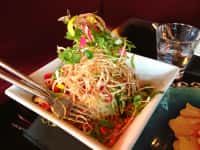
9.3Masaki Saito's name is the spine of the restaurant, from the counter to the menu to the way the room is discussed in Toronto. The meal reads as a chef-led counter, not an anonymous luxury sushi format.
Rayah
8.7Wafa El Rhazi is founder, owner and chef, and the restaurant follows the food story she brought from Paris and her North African family meals. Her shift from technology into hospitality gives the menu and room a personal point of view instead of a borrowed theme.
Chez Nad
9.4Chez Nad is inseparable from chef-founder Nadège Nourian, who turns her Lyonnais upbringing and long Queen West pastry career toward savoury French cooking. Her authorship connects the restaurant’s name, its bistro format, and the food on the plate.

PAI
9.2Chef Nuit Regular gives PAI a named kitchen identity rather than an anonymous downtown Thai format. The menu and origin story both point back to her Northern Thai cooking.

Limon Beaches
9.4Benjamin Mishaev is not a distant name attached to Limon; he is the formally trained chef who co-founded the restaurant with his brother Jonathan. The menu's modern Israeli point of view is inseparable from the brothers' Tel Aviv upbringing and Benjamin's kitchen role.
DaiLo
9.1Chef Nick Liu gives DaiLo a clearly authored point of view, joining Chinese-Canadian memory, Hakka roots, and French technique into a room that feels personal rather than generic.

Osteria Giulia
8.7Rob Rossi is the organizing force, not a background credit. The menu's restraint, seafood emphasis and Ligurian direction make the restaurant feel shaped by a named culinary point of view from the first order onward.

Excellent
Lume Kitchen and Lounge
9.3Chef Alex Abate is part of Lume's public identity, not a name detached from the menu. His current leadership and the restaurant's seasonal seafood-and-pasta direction give diners a clear person-to-kitchen connection.

Kiin
9.0Nuit Regular's name matters here because Kiin extends her Thai cooking into a more formal downtown setting. The room has named leadership across the kitchen, pastry, beverage, and service, so the experience reads as a full restaurant program rather than a single-dish showcase.
156 ONEFIVESIX
8.5MJ Jeong is both head chef and co-owner, giving 156 ONEFIVESIX a person-led identity. The current menu's Korean-French combinations make that leadership visible on the plate.
Punch
9.3Executive chef Mandar Kulkarni gives Punch a named culinary centre. His Indian roots and broader dining experience shape a menu that repeatedly translates familiar flavours into the restaurant's British frame.

Pizzeria Badiali
9.4Ryan Baddeley gives the shop a chef-led identity, turning a compact pizza counter into a more deliberate dough, sauce, and pie program.

Aloette Restaurant
8.8Patrick Kriss and the Alo Food Group give Aloette its unusual tension: polished cooking in a room that still feels like a diner counter. The menu works because the technique never buries the appetite.

Florette
9.1Mann Bijlani gives Florette a kitchen identity that goes beyond a pretty room. The menu reads like a chef making choices plate by plate: clams with curry leaves, hamachi with Thai green curry, cabbage with tonnato, and a dessert that has its own architecture.
Mimi Chinese
8.8Braden Chong gives Mimi a clear chef-led point of view: polished regional Chinese dishes, guide-recognized technique, and menu anchors that feel specific to this room rather than interchangeable across the city.
Union
8.4Teo Paul gives Union a clear authorship line. The room is not just a French-bistro category play; it is the original Ossington address in a broader Toronto restaurant story, and the menu still carries that personal centre of gravity.
PREQUEL & CO. APOTHECARY
8.9The room has named authorship rather than anonymous bar energy. Frankie Solarik is central to the public identity, with Gianluca Passuello on beverage and Lionel Duke and Joshua Algas named on the culinary side. That gives the menu a point of view diners can feel in both the glass and the food.

Mozy's
9.2Barbode Soudi's fine-dining background shows up in a casual chicken-shop format: brining, air-drying, charcoal cooking, and highly built dips and sauces make the menu feel designed, not assembled.

Alo
9.2Patrick Kriss's Spadina flagship pairs French foundations with seasonal courses, while Tim Yun's current chef de cuisine role keeps the kitchen story tied to named leadership.
Linny’s
9.1David Schwartz's name and Big Hug Hospitality context matter here because the room, menu, and family-memory premise feel authored rather than assembled from steakhouse defaults.

Don Alfonso 1890
8.9Chef de cuisine Davide Ciavattella connects the Toronto kitchen to the Iaccarino family lineage, giving the restaurant a clearer culinary identity than a luxury room that only trades on its address.
Nabe Hana
8.7The restaurant's identity is closely tied to You Kyung and Grace Cho, whose mother-and-daughter story shapes the food instead of sitting in the background. That gives the room a human centre and helps the menu read as family-recipe cooking rather than generic comfort food.
Death In Venice Gelato
8.4Kaya Ogruce gives the shop a clear point of view, with a lab-style approach that makes the flavours feel authored rather than generic.