Patatas Bravas at Madrina Bar y Tapas arrive layered like a millefeuille and finished with sriracha brava sauce and wasabi aioli, which is not how patatas bravas are supposed to read in Spain, and which is the clearest way into what the kitchen actually does in the Distillery District. The Catalan grammar is intact — tapas, platillos, pintxos, vermouth, sherry, a ham carving station inside an open kitchen — but the vocabulary borrows freely. Plankton aioli rides a tuna tartare cone. Nori powder coats a shrimp croqueta with kimchi dip on the side. The room reads Catalan from the door; the plates read like a kitchen that has decided exactly where Catalan can stretch and where it cannot.
The current menu organizes itself around a small list of anchors. Paella of Shrimp and Clams brings BC clams into the saffron aioli — Atlantic shellfish swapped for Canadian, the rest of the dish left alone — and serves as the warm communal plate that organizes a group order. Pulpo con Papas Aliñás keeps the seafood focus going with smoked octopus over Andalusian-style crushed potatoes and mojo rojo. Ajillo Shrimp arrives with a black garlic emulsion, ñora pepper, and rice crisps. Steak Tartare on a Roasted Marrow Bone gets egg yolk sauce and soy pearls. Crab & Avocado Salad Cannelloni works in romesco and salmon roe with cilantro cress. Oxtail Buns are steamed and pan-fried over slow-braised oxtail in red wine. Broccolini and Romesco and Padrón Peppers handle the vegetable side, the peppers blistered with paprika and lemon zest. Manchego Cheesecake — raspberry crumble, raspberry sorbet — closes the sweet tapas section rather than a separate dessert course.
What the menu shows is a kitchen that knows where to read sideways without diluting its source. Mojo rojo, romesco, ñora pepper, saffron, and Andalusian potatoes are the Spanish bones; the wasabi, kimchi, plankton, soy pearls, and tempura are the licenses the kitchen has decided it can take. The beverage list runs the same logic — cocktails, beer, wine, sherry, vermouth, and non-alcoholic options arranged in Spanish lanes so the drink order can move with the food instead of competing with it. Sherry and vermouth give the meal pacing tools most tapas menus in the city skip. A ten-course seasonal tasting menu runs alongside the regular order for groups that want the kitchen to set the progression rather than build it themselves. Reservations are recommended; this is not a place to walk in and snack.
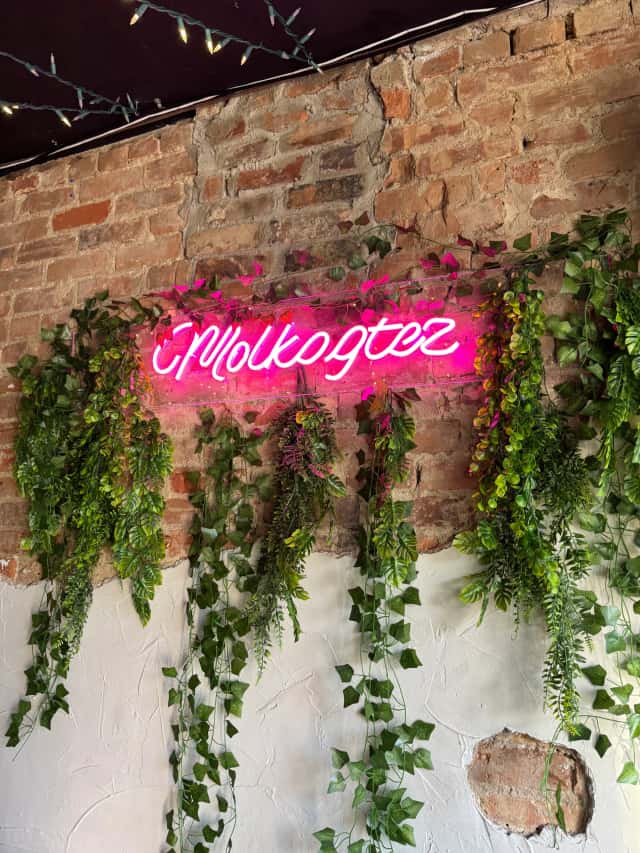
The Distillery District setting is part of how the restaurant works rather than scenery beside it. Terracotta tile, an open kitchen, the ham carving station, and a terraza that reads as Barcelona-inspired more than Toronto-imitative give the meal the architectural cues of a Spanish dining room without dressing as a theme. The carving station is the visible piece — jamón coming off the leg inside an open line is part of what guests see between courses, and the slow theatre of it grounds the dinner. Madrina opened here in 2018, and eight years inside the district has made it a settled night-out option rather than a curiosity — the kind of address visitors can find without a hunt and locals can plan around when the group wants something polished without going formal. The historic-quarter context does the rest: the walk in is part of the meal.
Madrina rewards a group that treats the visit as the whole evening. The shape of the meal is the point — Tuna Tartare Cones to open, a vegetable plate, paella and pulpo carrying the middle, Manchego Cheesecake at the close — and the beverage list moves alongside the food rather than as a separate decision. The weekly schedule is a constraint that organizes the visit: Wednesday closes at six, Thursday is dark, Friday and Saturday run the full noon-to-eleven shift. Picking the right night is part of planning the dinner. Bring more than two to the table and order across the menu; the kitchen is built for it.