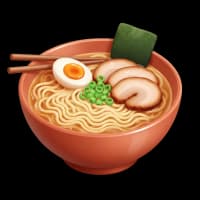
Kyouka House Ramen puts the shop’s working method in one bowl: kelp stock folds into a chicken-and-pork broth made fresh each day, then pork and chicken chashu, egg, naruto, wood ear mushroom, bean sprouts and chilli paste arrive with distinct jobs to do. The construction is generous without reading as excess. Naruto and wood ear mushroom bring different kinds of spring and chew, while bean sprouts and chilli paste keep the finish lively. Each topping changes the broth’s texture or temperature, and the two stocks give the bowl both a clean base and a deeper savoury finish. In a compact Queen East shop, this is the order that explains Kyouka fastest. The open kitchen keeps the work visible as each bowl moves from broth to toppings.
The ramen menu widens that idea without blurring it. Kyouka Paitan Apple Miso Ramen sets a gentle fruit-led sweetness against the same rich broth, then steadies it with pork chashu, marinated egg, vegetables and chilli-seasoned ground chicken. Shio paitan takes a cleaner route through shio tare, corn, mushrooms, sesame and chicken chashu. Dipping Tsukemen changes the mechanics altogether: cold noodles sit beside warm chicken-and-pork dipping broth, leaving the diner to control the concentration of each mouthful. The format slows the meal by design, since every bite begins with the diner choosing how much broth the noodles carry. Egg, fish cake, mushrooms, chives and both pork and chicken chashu keep that split format from feeling spare. These are not cosmetic variations on one base; each bowl changes how richness, salt, sweetness and texture arrive.
The range continues beyond the meat broths. Truffled Vegetarian Mushroom Ramen builds on mushroom stock, then doubles down with truffled mushrooms and fried shiitake before bamboo, nori, chilli and onion oil sharpen the edges. A marinated egg remains part of the standard bowl, a detail worth checking for stricter dietary needs. Donburi gives the same focused-meal logic to rice: one bowl carries slow-cooked beef tendon with sake, ginger and shichimi; another combines chilli-seasoned ground chicken with garlic, soy and sesame oil. Karaage carries ginger, garlic and mirin; takoyaki takes bonito, aonori and garlic mayonnaise; age dashi tofu pairs tofu with dashi sauce and ginger. Those sides support the meal rather than pulling the menu away from its noodle-house centre. The vegetarian bowl still lands with its own mushroom stock, not as a subtraction from the house ramen.
Kyouka’s approach traces to a Tokyo predecessor established in the late 1990s, but the useful part of that lineage is visible in the cooking rather than in a recital of names. The recipes were adapted around ingredients available in Canada, while the underlying habits stayed specific: scratch-made broth, separate seasoning systems, chashu in more than one form, and a narrow enough menu for those details to repeat with intent. The Queen East location brings that lineage down to neighbourhood scale. The open kitchen compresses the distance between preparation and meal, placing the work behind each bowl in plain view. That Tokyo-rooted method now works in a Queen East dining room of just over twenty seats.
Kyouka’s compact scale makes it easy to understand as a neighbourhood restaurant. A lunch order can be one complete bowl; dinner can move through ramen, donburi and a side without turning into a sprawling meal. Takeout and delivery extend that utility beyond the dining room, while the open kitchen gives dine-in its own reason to matter. The menu’s range does not come from chasing every category. It comes from changing the relationship among broth, seasoning, noodle and topping, then offering rice bowls when noodles are not the answer. That is enough flexibility for different appetites while keeping the restaurant’s identity legible. Most open days still divide cleanly into lunch and dinner service, with the same focused program carrying both.