The Dak Gang Jung at Table SODAM forces a choice before the chicken ever hits the fryer. Boneless and glossed in sweet-and-spicy sauce, it can land as a rice meal trailing soup and a spread of banchan, or it can arrive plated over Alfredo linguini or a skillet of corn cheese. Pasta alongside Korean fried chicken isn't a misprint on the menu of this Bank Street restaurant in Old Ottawa South; it's one of the standard ways the house plates its signature dish.
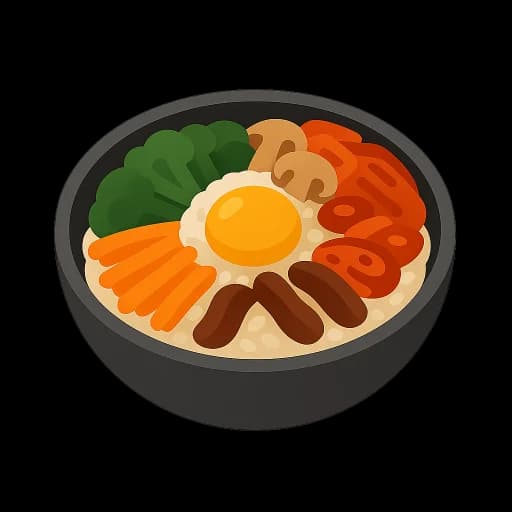
The chicken anchors the menu. Dak Gang Jung comes spicy or soy, boneless for one or whole for the table, and a cheese version buries the bird under a melted layer for a group ready to make an evening of it; the whole halal chicken is built for the slow, beer-and-soju sharing that unfolds across a couple of hours. Around it sits a tight roster of Korean comfort cooking served as complete sets: bulgogi of thin, sweet-marinated beef; gamjatang, pork on the bone simmered in bean-paste broth; galbi jjim braised in sweet soy; kimchi fried rice with jumbo shrimp or fried tofu; bibimbap in bulgogi or vegetarian form under the house Sodam sauce; a seafood pancake shot through with shrimp, calamari, and crab; and spicy rice cakes with fish cake. Each main lands with rice, the day's soup, and a handful of side dishes.
What reads first as a fried-chicken specialist is, underneath, a homestyle Korean kitchen. The set-meal structure — rice, soup, and a rotating run of banchan with every main — is the traditional Korean meal rather than an à la carte menu broken into upsells, and the side dishes get treated as cooking rather than garnish. The fusion flourishes, the pasta and the corn cheese, read less as trend-chasing than as the moves of a kitchen relaxed about its own foundations. The fermentation runs deep enough that it sells its kimchi by the half-litre jar, cabbage and cucumber, for diners who want to carry the work home.
Table SODAM didn't arrive from nowhere. It grew out of the Table 85 family, and the two remain linked as one Ottawa project in traditional Korean cooking, modern where it chooses to be and traditional where it counts. The restaurant opened in the spring of 2018, and from the start it has been a compact twenty-four-seat dining room — the kind of small footprint that reads as a constraint until the food arrives. The size has stayed the point: small enough that the cooks plate each set to order rather than hold dishes on a steam line.
The format is also the value. Because each main arrives as a set — the protein, rice, the day's soup, and the banchan — a single order eats like a small feast rather than one plate, and a table that can't agree finds something for everyone: the fried-chicken crowd, the stew orderer, the vegetarian working through a tofu bibimbap. What doesn't get finished travels well, and the kitchen leans into that, sending its food out for takeout and delivery alongside the dining room. The chicken in particular holds its crispness on the trip home.
The rhythm here is neighbourhood, not destination. Table SODAM closes on Mondays, splits its days into a lunch service and a dinner service with the kitchen going dark in the afternoon between them, and opens for a single daytime stretch on Sundays. That isn't the calendar of a place chasing a crowd; it's the calendar of a kitchen that has settled on what it cooks and when. The reward for showing up inside those hours is Korean fried chicken at its crispest, sweet-spicy sauce still catching the light, and the side dishes that turn one order into a full meal.