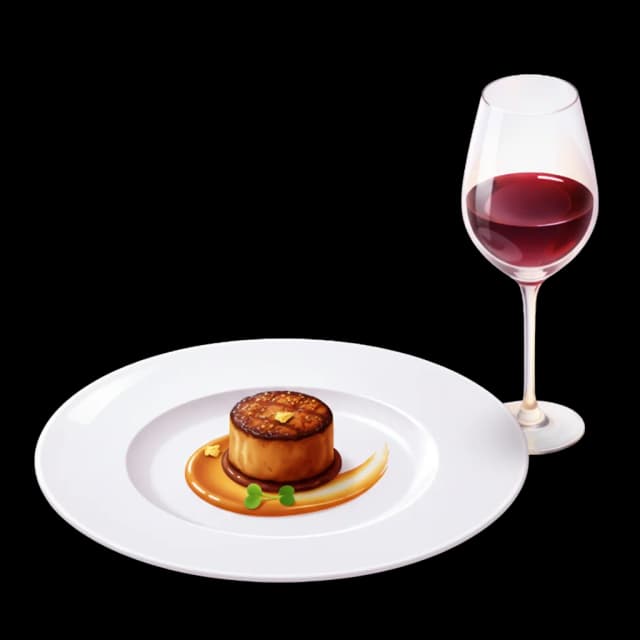
Start With Steak Frites
Choose Steak Frites when someone in the group wants the most familiar anchor before entering the dark room; the peppercorn sauce and sirloin format should read clearly without visual cues.
First time here? Take the 30-second tour of how Restaurantica works!
Dinner at Dark Fork begins in the light. Guests gather in a lit lounge, read through a short list of mains, and lock away phones and anything else that glows before a server's voice leads them into a dining room with no light at all. From that point sight is gone for the rest of the meal, and the person guiding the table — a visually impaired server, for whom the dark carries no disadvantage — becomes the most capable guide in the building. Ottawa had no restaurant built on this idea until Dark Fork opened in the ByWard Market.
The menu is deliberately short, and the brevity is structural: a table settles its order in the lounge, before the darkness starts, rather than squinting at a card once inside. Steak frites is the clearest steakhouse anchor on the list, AAA Canadian sirloin under peppercorn sauce. Crusted chicken parmesan arrives with preserved lemon green salad, shaved Reggiano, and fingerling potatoes. There is a San Marzano pasta finished with basil and Parmigiano Reggiano, a fish of the day with roasted vegetables, and a surprise dish listed as none of the above — a main the kitchen picks and the guest accepts without knowing. Dinners run as two-course or three-course formats, with an optional plate of munchies for the table.
A short menu eaten in the dark puts unusual weight on the cooking. With no plate to look at, a diner reads a dish through texture, aroma, temperature, and the order in which things arrive, and seasoning or doneness has nowhere to hide. The familiar mains are chosen with that in mind — sirloin and peppercorn, breaded chicken and Reggiano, tomato and basil all register by taste alone, which is what the format demands of them. Trust in the guide becomes part of the meal; a diner learns to ask where things sit on the plate and to take a server's word for it. The surprise dish turns the premise into a decision made at the table: one guest can hand the evening over completely while another keeps a main they can still picture.
The darkness is the event, not the backdrop, and the visit is paced for it. Dinner runs about ninety minutes, long enough to let conversation, guidance, and the slow work of identifying what is on the fork become the point. Because a diner cannot inspect a plate, the kitchen asks about allergies and dietary needs before service rather than at the table. It rewards a group that all want the same unusual thing, and asks a little patience of anyone who came only for a quiet dinner.
None of this is improvised. Moe Alameddine opened Canada's first blind dining restaurant in 2006, and Dark Fork carries that work into Ottawa, where the doors opened in September 2024. The servers who run the dark dining room are visually impaired, recruited with support from the CNIB, which places the night's central skill — moving and serving with confidence in total darkness — with the people who own it rather than perform it.
Daylight brings the counterpart. The patio, the first of its kind in the city, runs on sign language: Deaf servers take the orders, every menu item has an ASL sign posted beside it, and no guest is expected to arrive fluent. The signs cover the same dishes; the exchange simply happens in another language. The patio takes walk-ins and keeps no reservation book, while the dark dining room indoors books online and asks parties of six or more to phone ahead. Indoors, guests give up sight and follow a blind server's lead; outside, they order by sign rather than by voice. Between the two, Dark Fork treats accessibility not as an accommodation bolted onto a restaurant but as the premise the whole place is built on.
A complete-darkness meal guided by visually impaired servers gives the visit a memorable reason to exist beyond the food list.
Steak, chicken parmesan, pasta, fish, and a surprise option make the menu easy to navigate before entering the dark room.
The sign-language patio adds a second inclusive experience with Deaf servers and ASL ordering cues.
This is Restaurantica’s own read — synthesized from publicly available sources across diner signal and editorial research, last updated July 2026. It’s our interpretation of the evidence, not a crowd average — and placement is never for sale.

Dark Fork is built for diners who want a meal to feel unfamiliar in a controlled way. Guests choose a main course, then the dark room shifts attention toward texture, aroma, pacing, and trust in the guide.

The room experience is interactive by design: guests rely on visually impaired servers, give up visual cues, and let conversation, guidance, and sensory surprise become part of dinner.

The restaurant turns accessibility into a public-facing dining format, with visually impaired servers indoors and a sign-language patio staffed by Deaf servers. The visit carries a cultural learning component as well as dinner.

Dark Fork suits a date night when both people want the same unusual challenge. The darkness removes visual distractions and gives the meal an easy shared story without depending on a long menu.

The patio gives Dark Fork a daylight counterpoint to the dark-room dinner. Its ASL ordering format and Deaf service team make it more than ordinary outdoor seating.
Restaurantica’s write-up above is synthesized from broad public signal — community reviews add the first-person layer. Share the nuances of your visit to Dark Fork in Ottawa: the standout dishes, the room, the service.
Write a reviewDark Fork is known for dine-in-the-dark dinners guided by visually impaired servers in the ByWard Market.