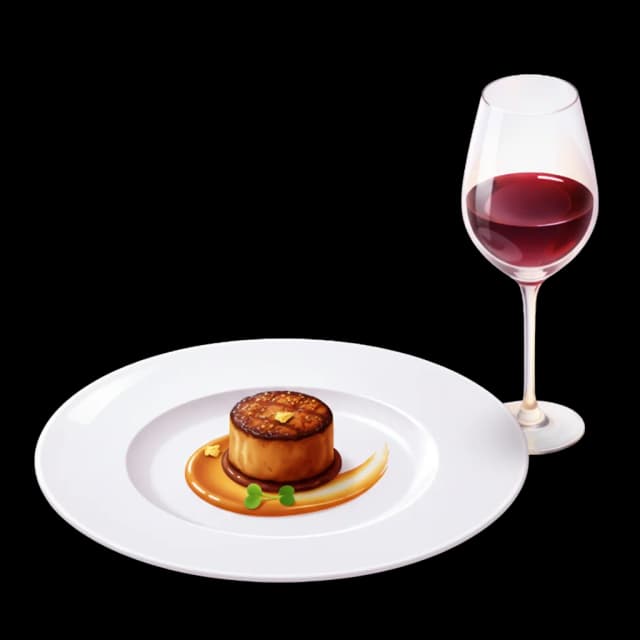
Idlewyld is the London dining room you book when the meal itself is the occasion, rather than the thing that happens before the rest of the evening. It keeps house in an 1878 Victorian mansion on Grand Avenue, in the brick-and-gabled Old South quarter of Wortley Village — a seventy-seat dining room, a gracious front porch, and a Garden Courtyard tucked out of sight for the weeks the weather cooperates. The architecture alone would fill the tables. The kitchen behaves as though that isn't the point: the setting opens the meal, and the food is what has to carry it.
The dinner menu reads like a restaurant's, not a hotel's. The clearest centrepiece is the confit garlic and panko-crusted lamb rack, built out with purple-potato pomme purée, green bean provençal, roasted golden beets, mint coulis, and a balsamic demi-glace. From there the kitchen runs in two directions at once — pan-seared black cod over butternut squash purée and risotto verde for the lighter route, seafood linguini heavy with Digby scallops and black tiger shrimp for the richer one. Grilled octopus arrives with saffron spaetzle and ground chorizo; a ponzu-marinated wild boar chop leans on gochujang and forbidden black rice; the striploin and beef tenderloin hold the steakhouse line. Vegetarians are handed a composed plate rather than an apologetic one — asiago and scallion polenta timbales over a root-vegetable and lentil bolognese.
The daytime menu carries the same intent at a lower register. Lunch runs to pan-seared pickerel with risotto verde, gruyère-and-béchamel mushroom-and-asparagus crepes, and a pan-seared calves liver with rösti potato and a red-wine glace, alongside sandwiches that refuse to phone it in — a bison smashed burger under duck-fat-fried maitake and pimento blue cheese, a roast porchetta on cranberry focaccia. Pastry is its own argument for staying late: a hazelnut dacquoise layered with dark-chocolate crémeux and orange mousse, a chai-spiced crème brûlée, a matcha cheesecake on a sablé crust. It is the kind of dessert list that expects you to order a final course.
That breadth is the tell. Idlewyld is built to be chosen by format first and order second: a slow weekday lunch on the porch, a Sunday prix fixe brunch, a dinner that wants the full kitchen, or the monthly afternoon tea that runs entirely its own way. Brunch is no afterthought — crab cake eggs Benedict with poached eggs, hollandaise, haystack potatoes, and trout caviar is the plate people return for, with buttermilk-fried Cornish hen over brioche French toast close behind. The Garden Courtyard and front porch turn where you sit into part of the plan, the same way the menu turns what you order into one. Few London tables ask you to decide the shape of the visit before you arrive; this one rewards it.
The house has deeper roots than the menu. It was built in 1878 for Charles Smith Hyman and has operated as the Idlewyld Inn since 1986; Farhi Holdings Corporation has owned and run it since December of 2013, by the inn's own account. The current kitchen answers to chef de cuisine Trevor Stephens, whose name the restaurant prints on its menu — earlier local reporting noted his Red Seal training and time at the nearby Elm Hurst Inn. The composed plates carry his hand more than any single fixed house style.
What ties it together is timing as much as cooking. Dinner is a nightly proposition; Sunday brunch runs prix fixe; afternoon tea — scones with Devonshire cream, savouries, and a run of sweets — lands one Saturday a month and works best as its own outing rather than a stand-in for dinner. The smart approach is to choose the format that suits the occasion and let the order follow it: the lamb rack when the evening is the event, the black cod or seafood linguini when the Garden Courtyard is open and the afternoon has nowhere to be. Arrive on the right third Saturday and the table holds a tiered tray of scones and savouries instead of a dinner plate.