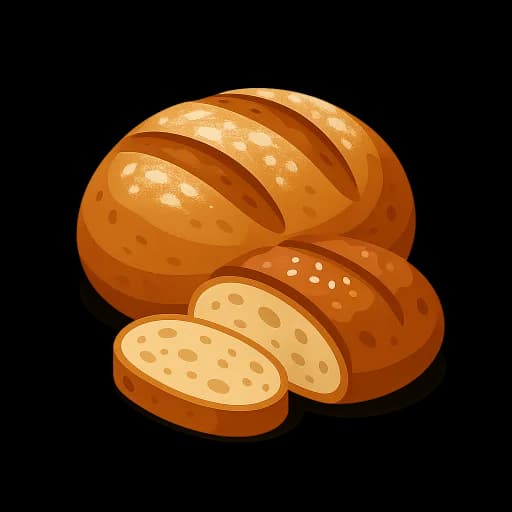
Order the Focaccia Barese on its own — Bari-style, dimpled and blistered, tomatoes and olives pressed into the top — and the rest of Eby Street Bodega comes into focus. The same bread anchors nearly every sandwich that crosses the counter, which makes the plainest item in the case the key to everything stacked on top of it. This is a compact sandwich-and-bakery counter in downtown Kitchener's market district, owner-operated and working off a board that changes by the day. It sits across from the Kitchener Farmers Market, and that proximity is less an accident of address than a statement about where the produce is expected to come from.
The sandwiches read as designed rather than assembled. The Mortadella layers gran mortadella, Parmigiano Reggiano, organic greens, garlic oil, and giardiniera into the clearest version of the shop's Italian-bodega side, treating the focaccia as the main event instead of the wrapper. The Alpine Farmer runs speck, aged cheddar, pickles, apple, organic greens, mustard, and butter through a single handheld, holding smoke, dairy, crunch, and fruit in balance. Around those anchors the board keeps moving: The Burrata and the Eby Caprese for the vegetable-forward orders, the Baja Bodega Chopped Cheese and a Barese with pepperoni and zhug when the kitchen wants more heat, an Egg and Cheese or Smoked Salmon on the mornings they appear. Current items run until they sell out, so the lineup a regular finds on Thursday is often gone by Saturday.
What holds the rotation together is the baking. Organic flour and house-made focaccia give the counter a bakery backbone, and the daily board rests on it: the format stays familiar enough to order in a hurry, the fillings specific enough that regulars come back to see what changed. A shop that rebuilt its menu every day on ordinary bread would tire of its own novelty within a month; this one carries the churn because the thing underneath it never moves. It is a bakery in the literal sense before it is a sandwich shop — coffee and baked goods share the case, and the focaccia is proofed and baked in-house before it becomes a sandwich, a standalone slab, or the base of whatever the kitchen built overnight.
Anna Staszewska and Dino Trtovac run the place, and the division of labour is part of the story. Local reporting ties Dino to the bread and Anna to the sandwich design, which tracks with what reaches the plate — there is no separate named-chef narrative here, and the shop does not need one. The hand behind the counter is the ownership itself. The philosophy is stated plainly: local produce, organic flour, and a no-tip model built on above-living-wage pay, so the price on the board is the price in full. Downtown Kitchener's market district gives the shop its character as much as its sourcing does — this is a neighbourhood counter with a loyal clientele, the kind of place regulars fold into a weekly rotation rather than save for an occasion. Every so often the counter converts into a ticketed supper club, a multi-course evening that shows the same kitchen in a longer form and sells out fast.
The bread is also why the format travels. A counter this size could never carry a broad restaurant menu, but focaccia sandwiches scale cleanly, and the catering side leans on exactly that: the same Mortadella that explains the shop at a table for one still makes sense on a tray for twenty. For a casual visit the smart approach is to check the day's board and come early, because the sold-out language is a description rather than a marketing line. Saturday opens earliest, and the focaccia that carries the whole counter is baked that morning and gone by afternoon.