Sakana’s name lays out the restaurant’s working idea: fish at the centre, small dishes made for a drink, and conversation gathering around the table. At Sakana Asian Cuisine, that idea becomes a Japanese menu with several distinct ways in. Lunch can be direct and compact; dinner opens onto nigiri, sashimi, rice bowls and composed starters; omakase turns the order over to the chef. A sake program gives the drinks the same attention as the food, while the Friday-and-Saturday late-night selection creates a separate reason to come after dinner service. The range never asks the kitchen to abandon its centre. Lunch, dinner, omakase and Friday-and-Saturday late night remain distinct formats under the same name.
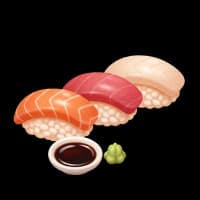
Sakana Nigiri is the clearest first read on that focus. The eight-piece set brings together bluefin tuna, salmon, mackerel and scallop, with each fish prepared in two ways; it reads less like a sampler than a compact demonstration of handling and restraint. Kaisen Don takes the same priorities into a bowl, setting assorted fish and salmon roe over sushi rice so seasoning and texture share the work. The bowl is generous, but it does not turn the fish into garnish or the rice into filler; each remains legible. Hamachi Tartare pushes in another direction, pairing yellowtail with lime white-soy vinaigrette, avocado, pickled jalapeno and frisée. Acidity and heat sharpen the fish without burying it. Kuromitsu Panna Cotta carries that precision through dessert, where Japanese black sugar syrup and seasonal fruit compote meet the dry crunch of hojicha crumble.
The technical choices behind those plates give Sakana its strongest character. Seafood imported from Japan changes with the seasons, and dry-aging is adjusted to species, fat content and time of year rather than applied as a blanket technique. Japanese rice is prepared fresh through service and seasoned to complement the fish. Omakase makes that responsiveness visible: the chef controls ingredients, preparation and sequence, and more than eighty per cent of the dishes are developed for a single ticketed event. Familiar orders become reference points, not a checklist of courses guaranteed to return. Sake can arrive by the glass or bottle, beside a casual dinner or as part of omakase. A certified sake sommelier shapes choices for newcomers and enthusiasts alike, treating drink and food as parts of the same sequence. In omakase, seasonality determines what arrives and the chef determines when it lands.
Executive Chef Yoshiyuki Aiba gives the restaurant’s craft a specific biography. Born in Tochigi, Japan, he built his Canadian experience through Fin Izakaya, Auberge du Pommier and Ancaster Mills before leading Sakana’s kitchen. Those are different kinds of kitchens, and the useful thread is not the résumé itself but what the route permits here: Japanese technique handled with the composure of formal dining and the immediacy of an izakaya. The menu moves comfortably between exacting fish work and approachable formats without treating either as a compromise. At Sakana, the fish changes with the season and the aging plan changes with the fish.
That flexibility keeps Sakana from belonging only to the special-occasion diner. A rice bowl or compact lunch combination offers a direct entrance; dinner can widen into tartare, nigiri and sake; omakase rewards handing over control; the shorter Friday-and-Saturday selection makes Midnight Ramen its own late-night destination. That bowl of braised pork belly, wood-ear mushroom, scallion and sesame is not an afterthought attached to longer hours. It is another example of the restaurant designing a complete order for a particular kind of visit. Across those formats, fish remains the centre of gravity, but hospitality supplies the structure around it. By the last pour of sake, the name has done its work: fish has carried the meal without narrowing it.